Portuguese Flannel
Wool Fleece Overshirt
Wool Fleece Overshirt
Story
The good looks of wool built for breathable, all-season warmth
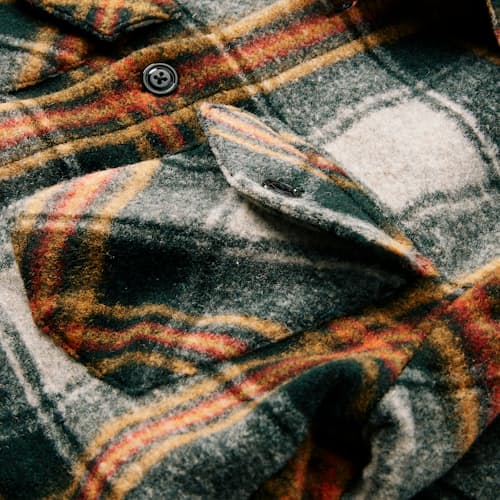
You don't have to sweat a wool jacket for milder climates with this quality overshirt from the old-world craftspeople at Portuguese Flannel. In a lighter wool-and-polyester blend, it stays breathable, with a velvety soft lining to feel good against your skin. It's one of our go-to transition pieces between seasons.
Features
- 2 chest pockets
- Button front and cuffs
Sizing
- Regular Fit
- For the best personal fit, compare the measurements of one of your best-fitting shirts to the garment measurements below
Garment Measurements
| S | M | L | XL | XXL | |
|---|---|---|---|---|---|
| Chest | 44 | 46⅜ | 48⅞ | 51⅛ | 53⅝ |
| Shoulder | 18½ | 19¼ | 20⅛ | 20⅞ | 21⅝ |
| Body Length | 29⅛ | 29⅞ | 30⅞ | 31½ | 32⅜ |
| Sleeve Length | 25¼ | 25⅝ | 26⅜ | 26⅞ | 27⅛ |
All measurements are in inches.
How to Measure - Chest: Measure straight across from edge to edge, starting 1" below the armhole, multiply by 2 - Shoulder: Measure straight across from shoulder seam to shoulder seam. Again, it’s easiest to measure across the back of the garment - Body Length: Start at the top of the shoulder where it meets the neck seam, and measure straight down to the hem - Sleeve Length: Start at the center of the back of the neck, measure straight across to the shoulder seam, and then follow the edge of the garment to the cuff. Pro tip: it’s easiest to measure across the back of the sleeve
Materials & Care
- 50% polyester, 35% fleece wool, 15% acrylic
- 100% viscose lining
- Made in Portugal
- Wash in low temperatures with like colors
- Hand wash recommended
About Portuguese Flannel
In Portugal, one of the last European countries to enter the modern age, there is a saying that goes “Pela obra se conhece o obreiro.” Loosely translated, it means “the workman is known by his work.” We doubt the founders of Portuguese Flannel, brothers Antonio and Manuel Magalhães, the 4th generation of a family of fabric manufacturers whose grandfather opened his own factory in 1935, would have any problem with that. You can see the craftsmanship of experienced hands (some of them second and third generation millworkers themselves) in every shirt they create.