Portuguese Flannel
Lobo Corduroy Shirt
Lobo Corduroy Shirt
Story
Every closet needs a little corduroy
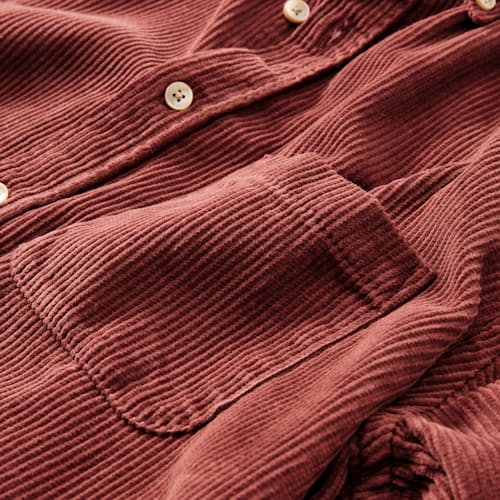
The Lobo Corduroy Long Sleeve Shirt from Portuguese Flannel is retro and of-the-moment in one supremely soft wear. With all the classic details like a front chest pocket, button-down collar, and stylish Mother of Pearl buttons, its silhouette is easy to match with a range of looks. Plus the textured corduroy not only gives you a silky soft feel, it also adds a stylish twist that strikes the perfect balance between relaxed and, well, buttoned up.
Features
- Allover cotton corduroy texture gives dimension
- Classic front chest pocket
- Button-down collar
Materials
- 100% cotton
- Shell of Mother of Pearl buttons
- Made in Portugal
Sizing
- The Portuguese Flannel Lobo Corduroy Shirt has a regular fit that’s true to size, take your usual size in jackets
- For the best personal fit, compare a similar shirt to the garment measurements below
Garment Measurements
| S | M | L | XL | XXL | |
|---|---|---|---|---|---|
| Chest | 41½ | 44 | 46 | 48 | 50¼ |
| Shoulder | 17¾ | 18½ | 19¼ | 19½ | 20¾ |
| Back Length | 29 | 30 | 30¾ | 31½ | 32¼ |
| Sleeve Length | 24¾ | 25 | 25½ | 26¼ | 26¾ |
All measurements in inches.
How to Measure - Garment Chest: measure on a shirt from side to side starting 1” under the armpit, multiply by 2 - Shoulder Width: measure on a shirt straight across the shoulder from seam to seam - Body Length: measure on a shirt from the high shoulder to the bottom hem - Sleeve Length: measure on a shirt from the center back to the cuff opening
Care
- Wash in low temperatures with like colors
- Hand wash recommended
About Portuguese Flannel
In Portugal, one of the last European countries to enter the modern age, there is a saying that goes “Pela obra se conhece o obreiro.” Loosely translated, it means “the workman is known by his work.” We doubt the founders of Portuguese Flannel, brothers Antonio and Manuel Magalhães, the 4th generation of a family of fabric manufacturers whose grandfather opened his own factory in 1935, would have any problem with that. You can see the craftsmanship of experienced hands (some of them second and third generation millworkers themselves) in every shirt they create.